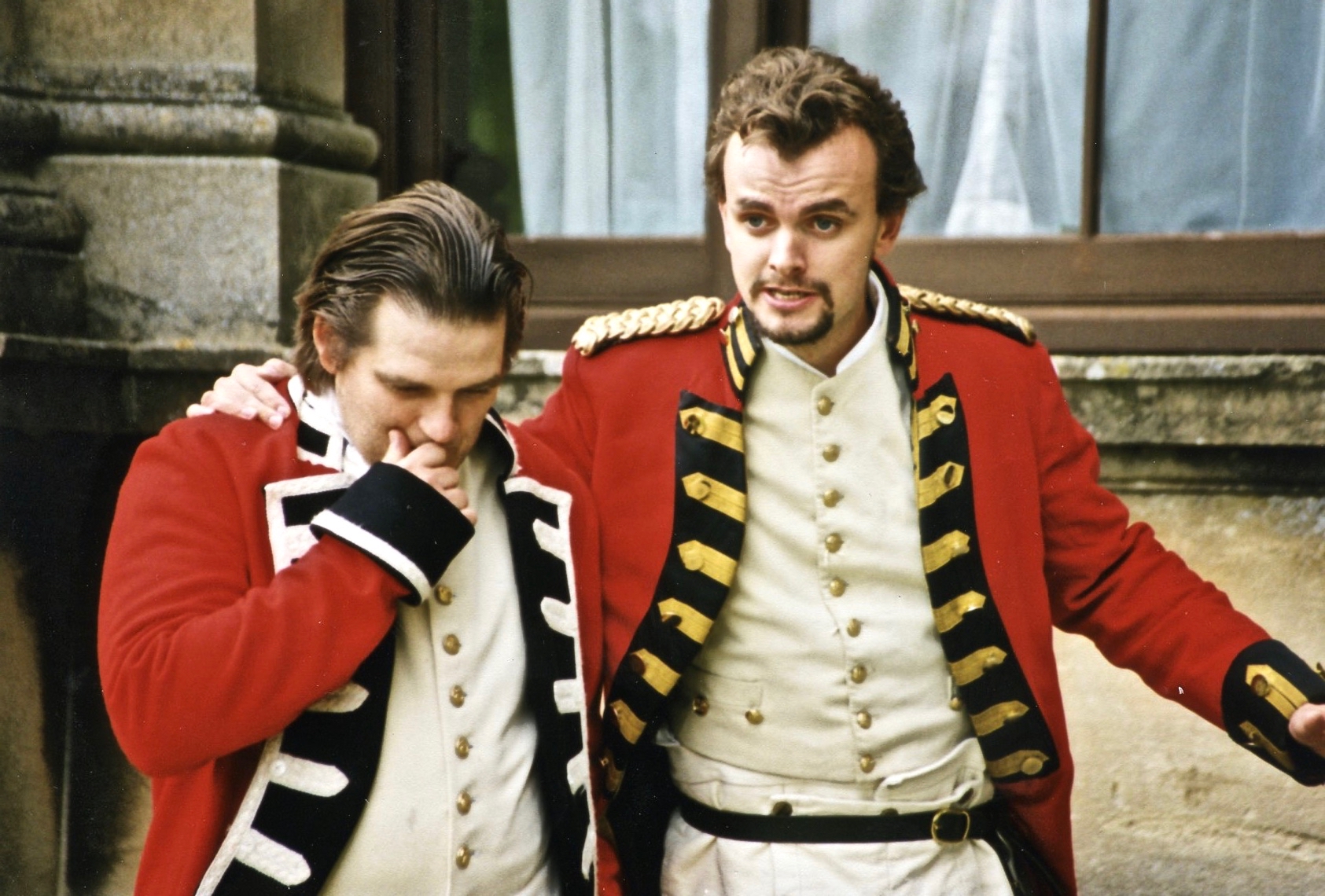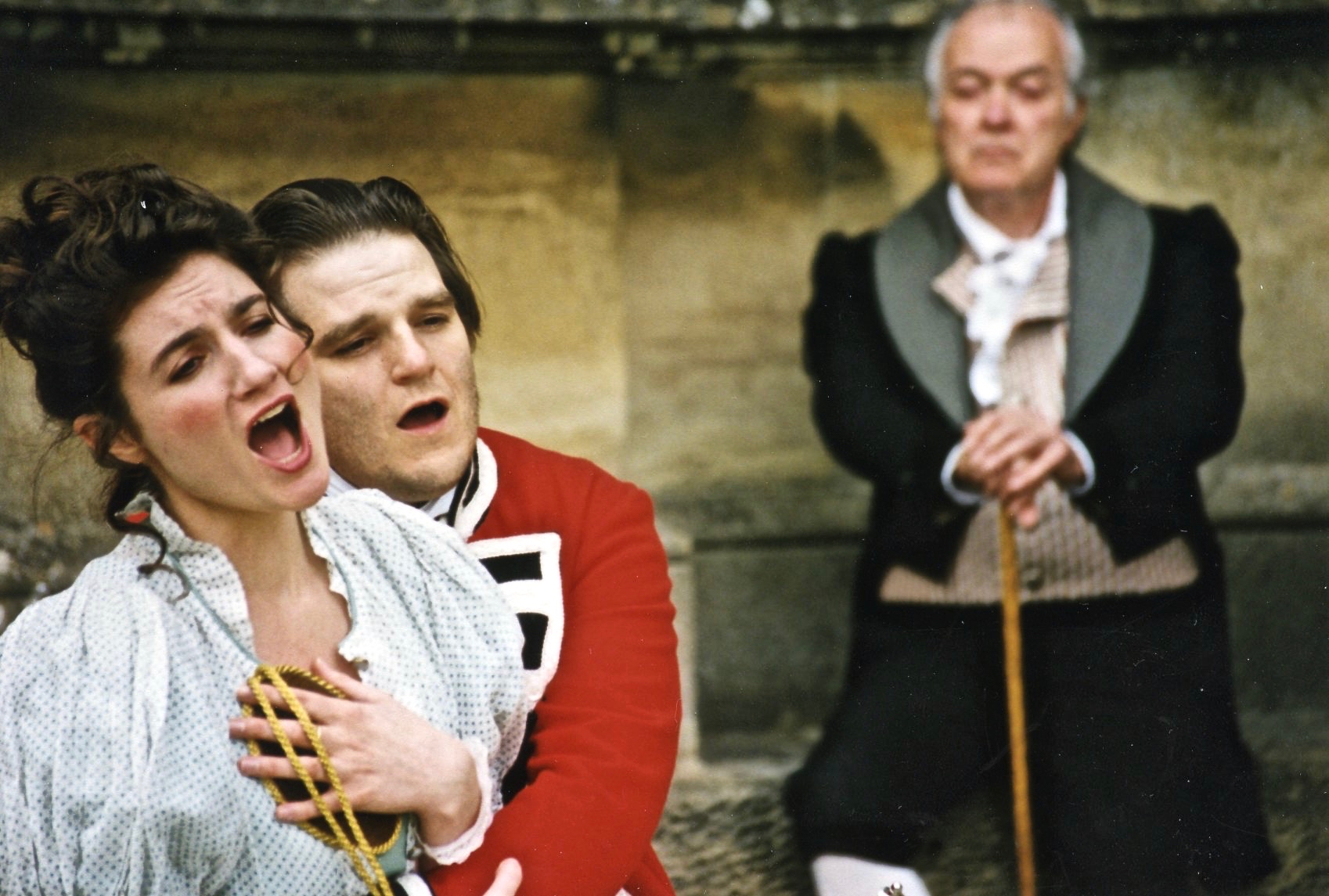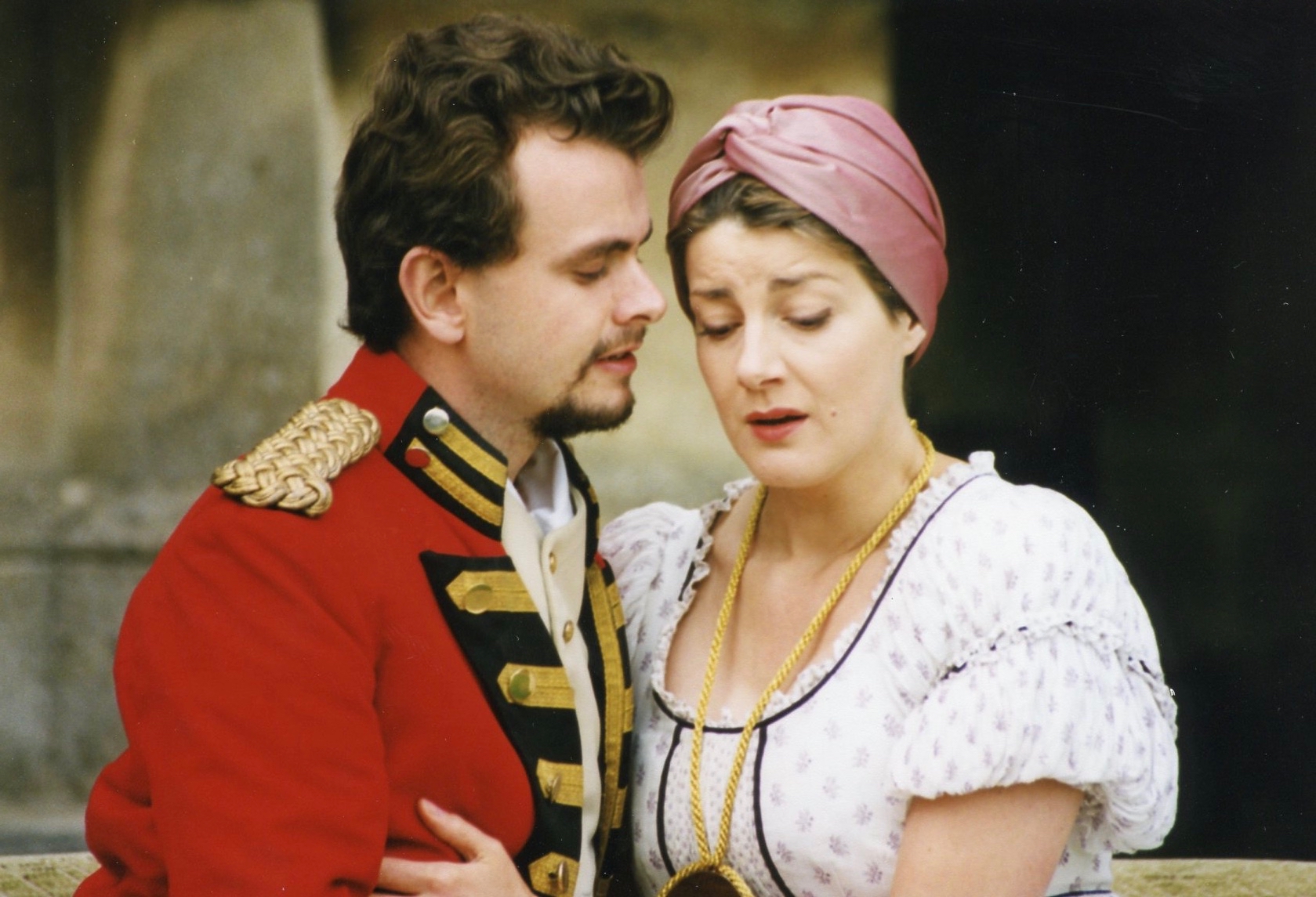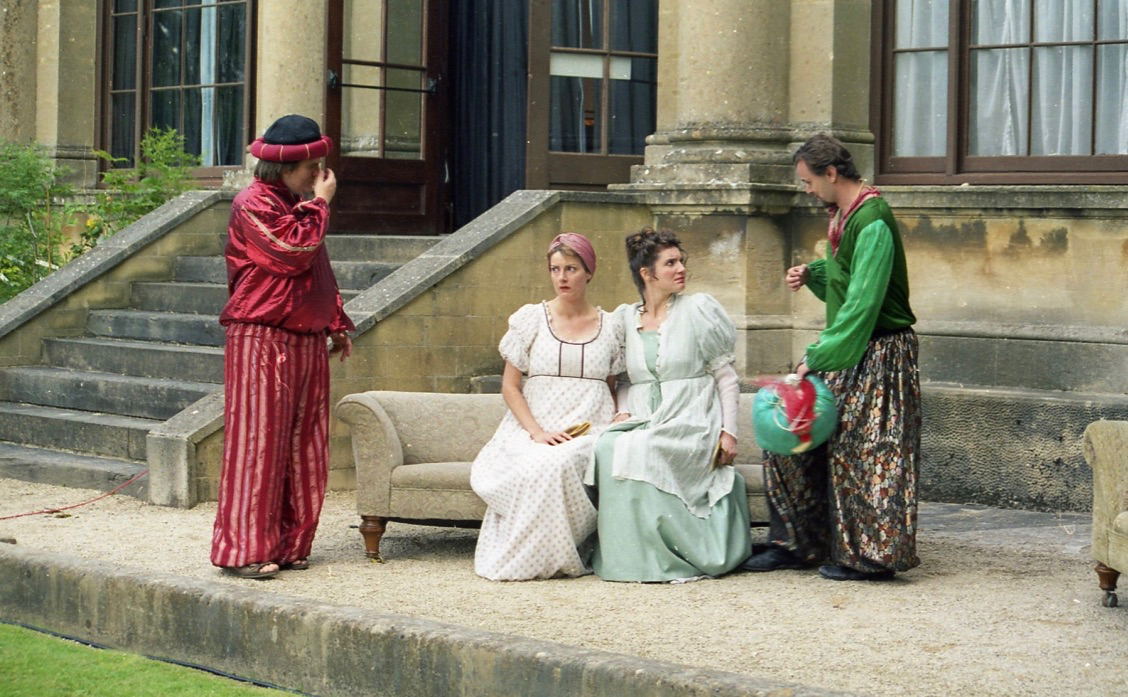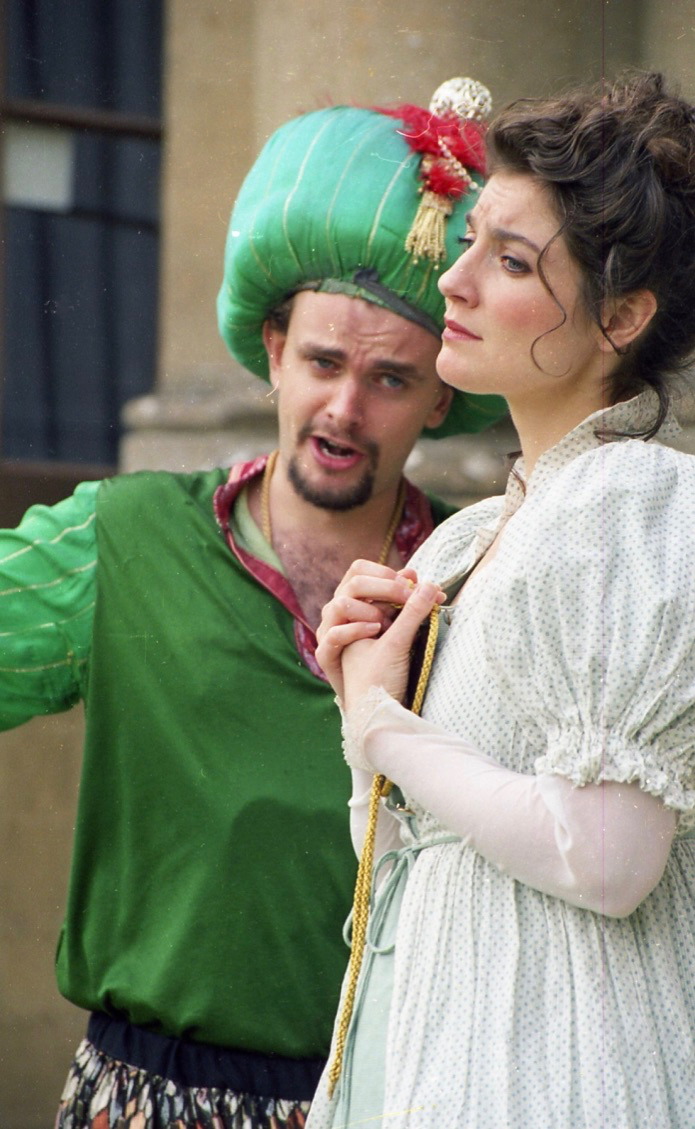

Così fan tutte
Mozart
Information
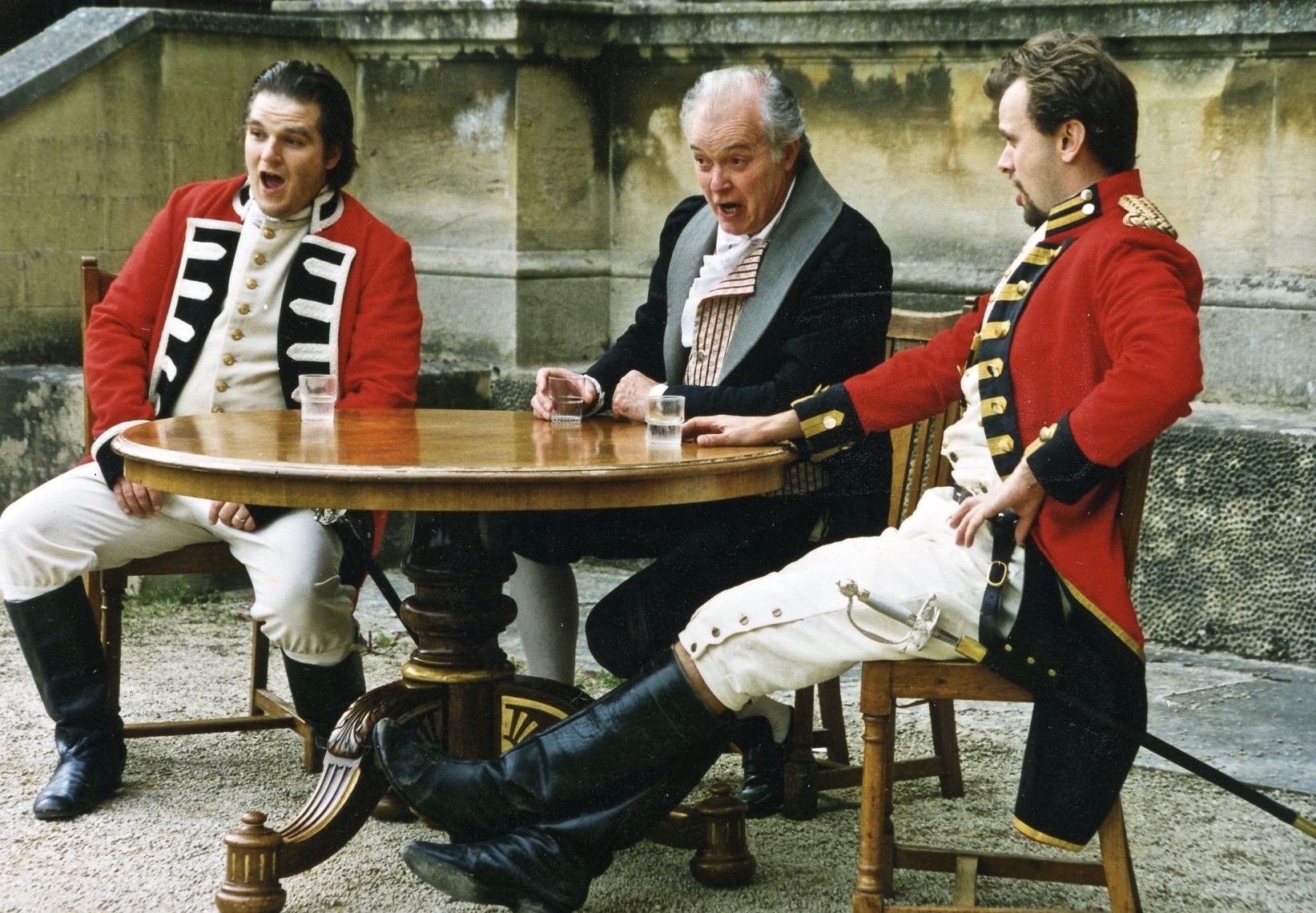
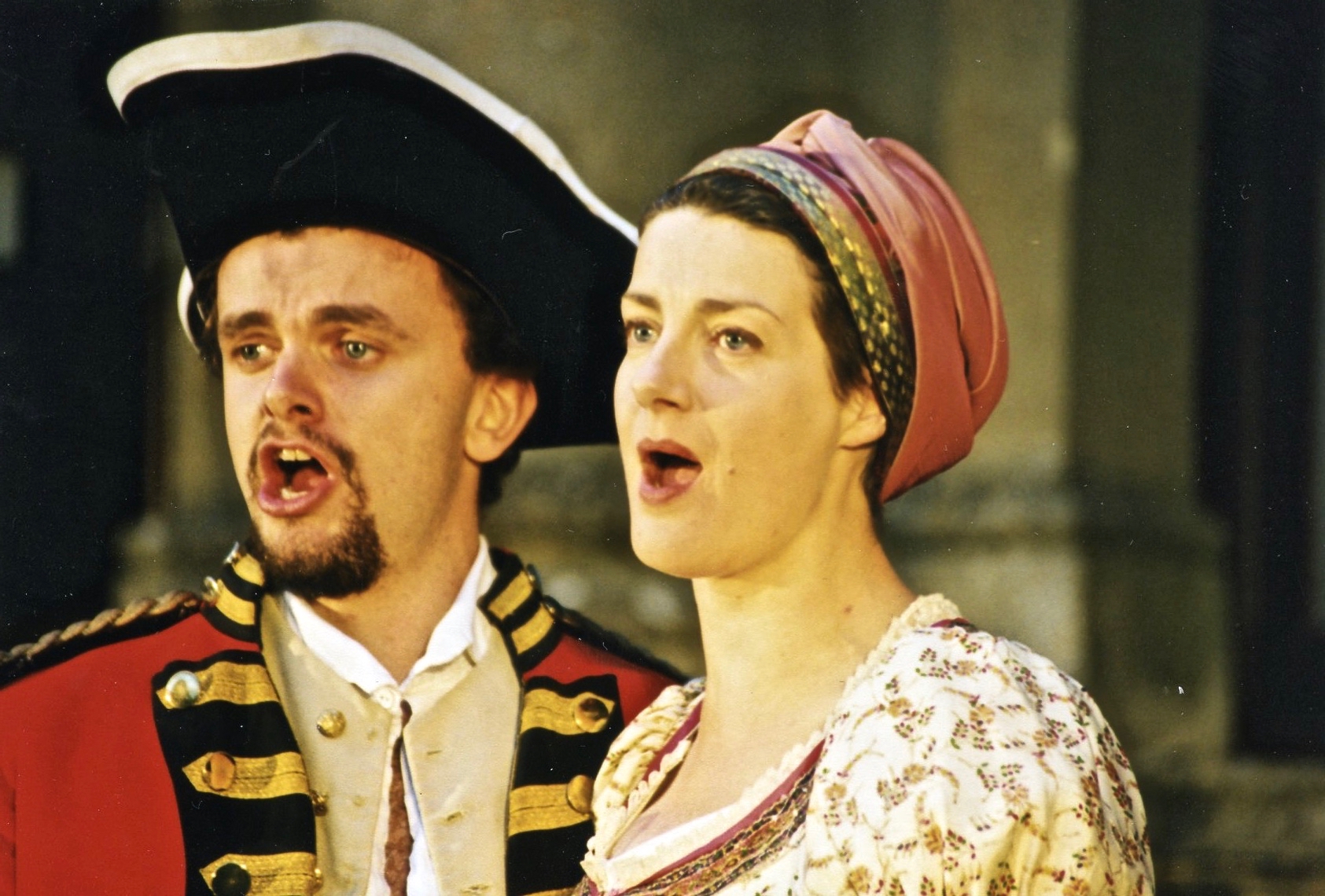
Così fan tutte, ossia La scuola degli amanti (K588, 1789), dramma giocoso in two acts
Music by W A Mozart
Libretto by Lorenzo da Ponte, English translation by Jeremy Sams
16 July 2000: The Orangery terrace, Westonbirt School
Cast
| Ferrando, an officer in love with Dorabella | Cato Fordham |
| Guglielmo, an officer in love with Fiordiligi | Michael Burke |
| Don Alfonso, a bachelor | Robert Bateman |
| Fiordiligi | Melanie Wall |
| Dorabella, her sister | Michelle Harris |
| Despina, their maid | Bibi Heal |
| Conductor | Simon Over |
| Director | Robert Bateman |
Orchestra: David LePage (leader), Jo Orsman violin, Nicholas Evans-Pughe viola, Warwick Cole ‘cello, Matthew Heighway double bass, Lucy Adams flute, Graeme Adams oboe, Verity Butler, Kevin Murphy clarinet, Paul Sawbridge, Michael Veasey horn, Keith Rubach, Christine Predota bassoon, David Stirling timpani, Simon Over harpsichord.
Synopsis
ACT I
Don Alfonso cynically jests with his friends Ferrando and Guglielmo regarding the con- stancy of their fiancées, the sisters Dorabella and Fiordiligi. He claims that all women are the same — cosi fan tutte. They confidently accept his outrageous bet to disprove their fidelity, and a plot is laid.
The girls are shattered when Alfonso announces that their men have been called up and leave for the battle front immediately. After the tearful farewell, they are inconsolable, despite all attempts by their maid Despina to persuade them to take a more pragmatic approach to their loss. Alfonso bribes Despina to help him introduce two rich and eccentrically foreign friends who wish to meet the sisters.
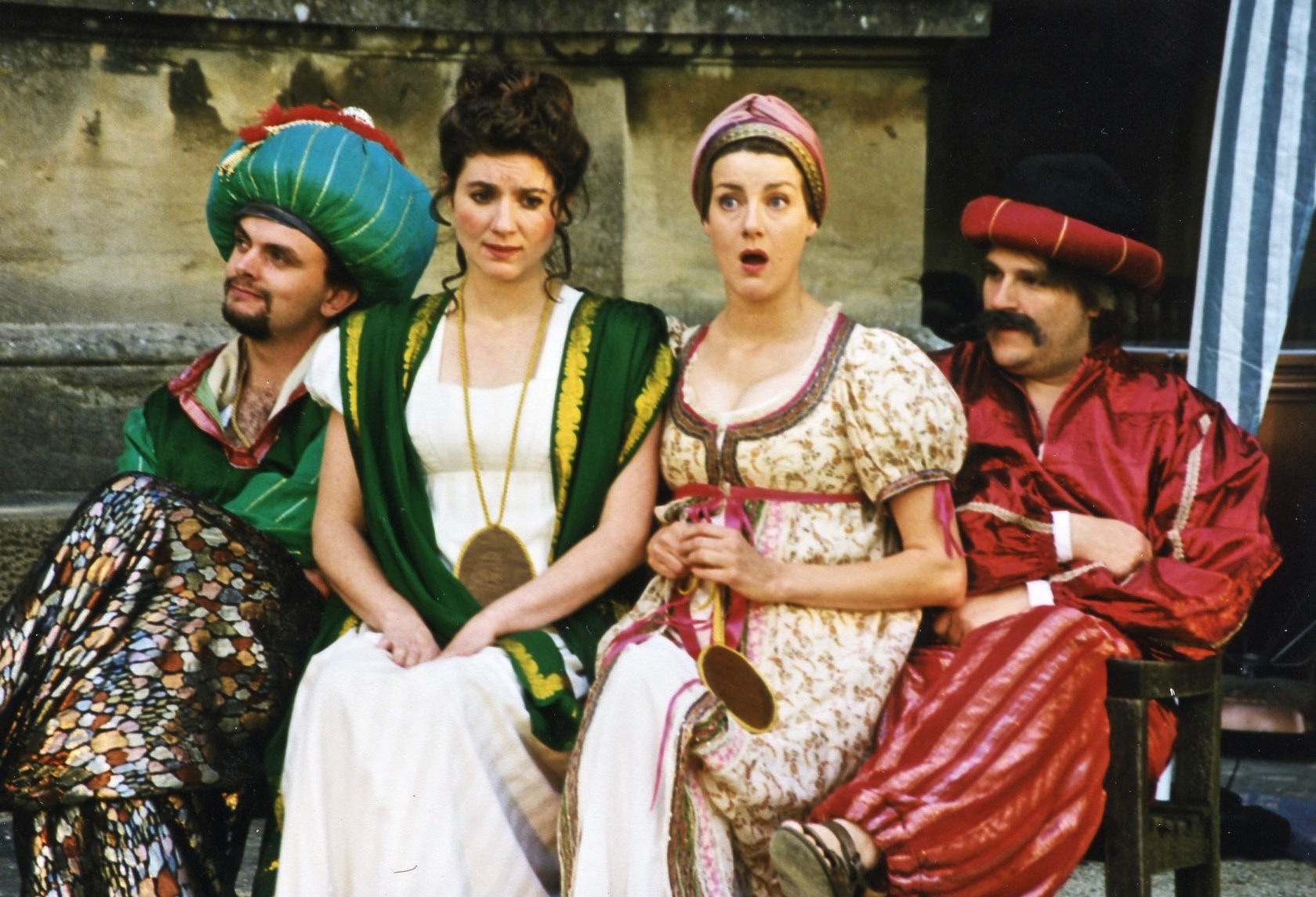
Unbeknown to Despina, these ‘friends’ are Ferrando and Guglielmo, heavily disguised: when their advances are soundly rejected by the women, they are of course delighted with their victory over Alfonso. He however requests more time for the ‘experiment'.
The preposterous ‘foreigners’ swallow ‘poison’ and collapse, forcing the girls to come to their aid. Despina, disguised as a doctor, miraculously cures them by magnetism. Nevertheless, Dorabella and Fiordiligi maintain their virtuous stance.
ACT II
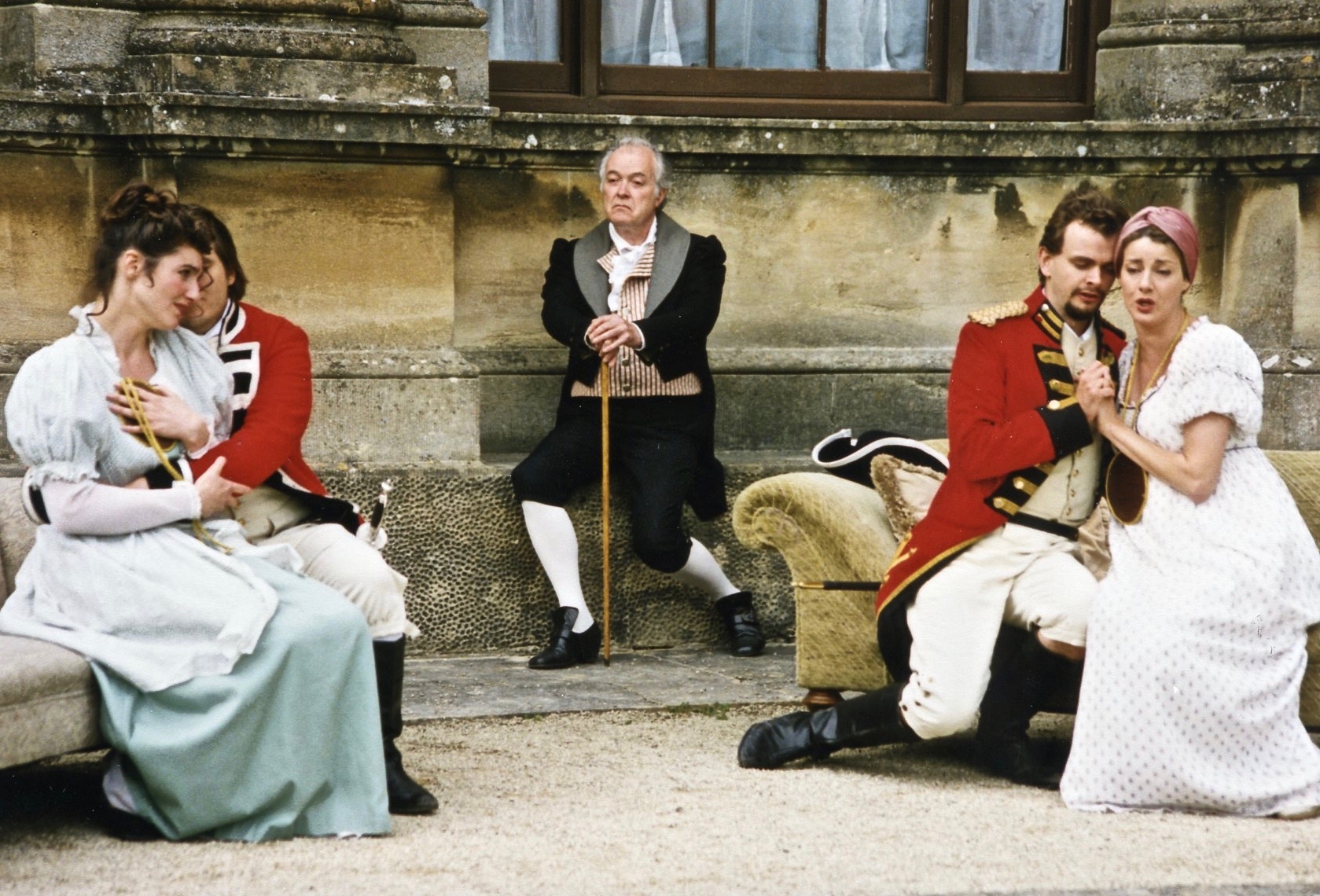
The girls are certainly intrigued by the strangers, and Despina succeeds in persuading them that a little flirtation will do no-one any harm. Dorabella prefers the disguised Guglielmo, Fiordiligi’s fiancé, whilst Fiordiligi finds Ferrando the more attractive. Dorabella succumbs first, and Guglielmo makes off with her locket as proof of his triumph. Fiordiligi bravely holds fast, but the continued persuasion of Despina and the now guilty Dorabella encourages her to give way to her desire. Guglielmo and Ferrando are in despair.
Don Alfonso and Despina (disguised as a notary) arrange for a double wedding between the sisters and their new partners. Just as the licence is about to be signed, a military band is heard — Alfonso feigns horror and announces that the soldiers are returning unexpectedly. In the confusion, the strangers disappear and shortly reappear in their true identity. They confront their unfaithful partners with the truth, but their own guilt remains disconcerting.
Who are the victors and who the victims?
Lorenzo da Ponte
Jeremy Gray
Mozart's colleague and librettist for Don Giovanni, Nozze di Figaro and Così fan tutte... a defrocked priest who used to play the violin in one of the lowest bordellos in Venice... friend and confidante of Casanova, ‘wanted’ over much of Europe... protégé of the Reverend Clement Moore, author of The Night before Christmas... first opera impresario in America... proprietor of a liquor and hardware emporium in backwoods Pennsylvania... the first professor of Italian at Columbia University...
Lorenzo Da Ponte (1749-1838) fulfilled all these roles - indeed these are only a few episodes in a long, adventurous life in Italy, Austria, London and the New World. A high- ly gifted man, like Beaumarchais and Casanova, he was one of those peculiarly 18th-cen- tury semi-scoundrels who were also men of great charm, culture, intelligence and wit.
Da Ponte was born a Jew, ordained Abbé in the Catholic Church, and subsequently was an emigré to the United States, where he lived with his wife and family. Born Emmanuel Cenegliano in the nearby city of Ceneda, his family converted to Christianity when he was 14 and he was baptized in the Cathedral. The bishop of the see, recognising the young boy’s talents, gave him his own name and sent him to the local seminary to be edu- cated. From there he went on to teach at the University of Treviso; however his liberal politics and penchant for married women led to a ban on his teaching and, in 1779, a 15-year exile from Venice. He departed for Vienna, where he took up his famous collab- oration with Mozart, but the death of his patron Joseph II led to his dismissal in 1791.
Così fan Tutte
Jeremy Gray
Così fan Tutte
The successes of Mozart’s early years in Vienna culminated in the opera Le Nozze di Figaro. This success was followed by that of Don Giovanni, also to a Da Ponte libretto. In 1789 the Emperor Joseph II ordered a revival of Figaro and following on its success commissioned a further opera from the Mozart/Da Ponte partnership. Da Ponte's model for his libretto is unknown, although the closest so far discovered is Cervantes’ La novela del curioso impertimente incorporated into Don Quixote, and which formed the basis of Anfossi’s opera Il curioso indiscreto. Although partner-swapping was a common theme in 18th-century plays, and the idea of disguise to check the chastity of a wife may be traced back to the myth of Cephalus and Procris in the Metamorphoses of Ovid, there are also clear parallels with works such as A Midsummer Night’s Dream.
Rehearsals for the first performances of Cosi took place in January 1790, but the first performances were overshadowed by the death of Emperor Joseph II on 20th February. Performances were resumed in July and August but the work was then dropped, although it received many performances elsewhere.
Throughout the 19th century it was regarded as being immoral and frivolous, utterly unworthy of Mozart’s genius. George Bernard Shaw wrote of its libretto: ‘The despised book after all has some fun in it, though quite as good plays have often been improvised in ten minutes in a drawing room in charades or dumb crumbo’. Today it has become as popular as Mozart's other operas, as we believe that the psychological truths beneath the play are revealed by Mozart's music.